Belting to Shape a Silhouette
A belt is a small tool that can redraw the whole shape of an outfit, depending on where it sits and how tightly it holds. This is a plain guide to using it well.
A belt draws the waist
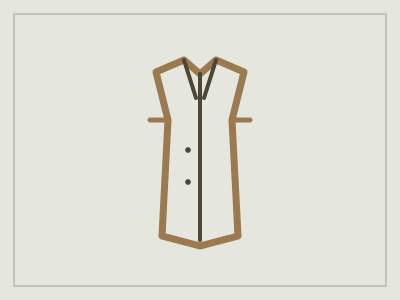
More than holding trousers up, a belt is a drawing tool. Wherever you put it, it draws a horizontal line and tells the eye, here is the waist. That single power is why a belt can rescue a shapeless outfit or ruin a well-balanced one, all depending on where it sits. Learning to place a belt deliberately, rather than simply threading it through the loops, turns it into one of the most useful shaping tools in a wardrobe. This is how to place it.
Where the belt sits sets the proportion
The height at which a belt sits divides the body, and where it divides changes everything. A belt does not just mark the waist; it decides how long the top half and the bottom half read.
- High, at the natural waist: lengthens the legs, shortens the torso
- At the true waist, the narrowest point: the most balanced, natural division
- Low, on the hip: lengthens the torso, shortens the legs
The natural waist, the narrowest point of your torso, is the safe and flattering default, because it divides the body where it is already narrowest and lets the legs read long below. Move the belt up for extra leg length, down for a longer torso, but know that you are trading one for the other.
Tightness sets the mood
How snugly a belt holds changes the whole character of an outfit. A firmly cinched belt draws a sharp, defined waist and reads deliberate and structured. A loosely draped belt marks the waist softly and reads relaxed and easy.
A belt is a dial from soft to sharp. Cinched firm for definition and formality, worn loose for ease and softness. The same belt on the same dress can read two entirely different ways depending only on how tightly you pull it.
Match the tightness to the outfit's mood. A crisp, tailored look wants a firmer belt; a soft, flowing one wants a looser hand. A belt pulled tight over a fluid, relaxed outfit can look at odds with itself, and a loose belt on a sharp, structured one can look accidental.
Use a belt to shape a shapeless piece
The most useful job a belt does is give shape to a piece that has none. A straight shift, a boxy shirt worn as a dress, a long unstructured cardigan, all of these are rectangles until a belt draws a waist into them.
This is where a belt earns its place. Take a piece that falls straight from shoulder to hem and add a belt at the waist, and suddenly there is an hourglass where there was a column. For a longer, looser piece, you can blouse the fabric slightly over the belt, pulling a little up so it drapes over the band, which softens the line and gives ease over the middle. A belt turns the shapeless pieces in a wardrobe, which are often the most comfortable, into shapes, which makes them far more wearable.
Match the belt's weight to the cloth
A belt and the cloth it sits on should agree in weight, or the belt looks out of place. A wide, heavy belt on a fine, fluid fabric crushes the drape and looks too heavy for its setting. A thin, delicate belt on a thick, structured coat disappears and looks lost.
So read the cloth and choose to match. Fine, fluid fabrics want a finer, softer belt that can be tied or draped without crushing them. Structured, heavier pieces can carry a wider, firmer belt that holds its own against the cloth. The belt should feel like it belongs to the same family as the garment, a partner in weight rather than an intruder. When a belt looks wrong, mismatched weight is often the reason, even before placement.
Let the belt lead or recede
A belt can be the focal point of an outfit or a quiet piece of shaping, and it is worth deciding which. A statement belt, wide or in a strong colour or texture, becomes the centre of the outfit and draws the eye to the waist deliberately. A quiet belt, matched in colour to the outfit, does its shaping work almost invisibly.
Decide which job you want. If the belt is the star, keep the rest of the outfit calm so it can lead. If the belt is just a tool for shape, match it closely to the outfit so it recedes and simply does its work of drawing the waist without announcing itself. A common mistake is a loud belt in an outfit that already has a focal point elsewhere, which splits the attention. Let the belt lead or let it recede, but not half of each.
Belt with intention
All of this comes down to treating the belt as a decision rather than a default. Before you thread it through the loops out of habit, ask what you want it to do. Lengthen the legs, so wear it high. Give shape to a straight dress, so place it at the waist and consider a soft blouse of fabric over it. Read relaxed, so keep it loose; read sharp, so pull it firm.
A belt carries a lot of power, and using it well is mostly a matter of noticing that power and directing it. When an outfit feels shapeless, or reads short in the leg, or wants a sharper waist, reach for a belt and place it on purpose. Once you see it as a drawing tool rather than a fastening, you will reach for it far more often, and to better effect.