How to Let a Coat Lead an Outfit
A coat is the largest thing you wear and the first thing seen, so it sets the whole line of an outfit. This is how to build around it rather than under it.
The coat is seen first
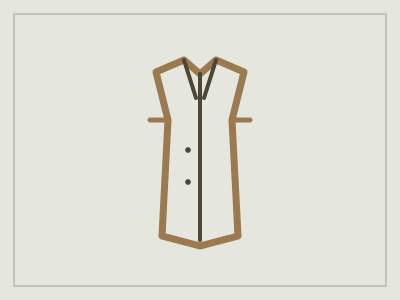
For much of the year the coat is the outfit, or at least the frame everyone sees first and longest. It is the largest garment you wear, it draws the outer silhouette, and out in the world it is often the only thing on show, everything beneath it hidden. Yet we tend to choose it last, thrown over whatever we already have on. Turning that around, choosing the coat first and building beneath it, produces far better outfits, because the biggest, most visible piece is then leading rather than clashing. This is how.
Read the coat's own line
Every coat has a line, a shape it draws whether you like it or not, and the first step is to read it. Some coats fall straight in a long clean column. Some flare from the shoulder or the waist. Some belt in to mark a waist; some hang loose and boxy.
- A straight, long coat draws a clean vertical column
- A flared coat draws an A-line, narrow above and wide below
- A belted coat draws a marked waist and an hourglass
- A boxy coat draws a soft, easy rectangle
Know which line your coat draws, because that is the outer shape of the whole outfit. Everything underneath should agree with it, not fight it, so read it first and let it guide the rest.
Match the volume beneath
What you wear under a coat has to fit its line, both literally and in proportion. A coat with a slim, straight cut cannot take a bulky knit and full trouser beneath without straining and bulging; a full, roomy coat can swallow more volume gracefully.
A coat sets a volume budget. A slim coat wants slim layers beneath so it falls clean; a full coat has room for fuller layers. Overfill a slim coat and it strains at the shoulder and gapes at the front.
So look at how much room the coat has and dress beneath it accordingly. Under a slim coat, keep the layers fine and close. Under a full one, you can wear a chunkier knit or a fuller trouser and the coat still falls properly. Matching the volume beneath to the coat's own room keeps the outer line clean.
Mind what shows
A coat covers most of the outfit, so plan around the small parts that actually show. Depending on the coat, that is usually the hem of whatever is beneath, the shoes, and a sliver at the neck. These few visible pieces carry the whole outfit when the coat is on.
Think about the hem line first. If the coat is shorter, the trouser or skirt beneath shows below it, so that hem and the shoes need to work with the coat. If the coat is long, almost nothing beneath shows, and the coat, the shoes, and the neck are the entire outfit. Either way, spend your attention on the parts that will be seen with the coat on, rather than perfecting layers that will be hidden all day. The neck especially, the one part always on show, rewards care: a scarf or a collar there frames the face above the coat.
Let the coat be the focal point
Because the coat is the biggest and most visible piece, it usually should be the outfit's focal point, and the rest should support it quietly. A beautiful coat over a calm, simple outfit reads elegant, the coat leading and everything else letting it.
So when you have a coat with real presence, a strong colour, a lovely cut, a rich texture, keep what shows beneath it quiet so the coat can lead. A loud outfit under a statement coat splits the attention and both suffer. If the coat is a plain, quiet one, then the pieces that show beneath can carry more interest, a richer knit at the neck, a shoe with presence. Decide which is leading, and let the other support it.
Balance the length
A coat's length sets a major line across the outfit, and it should relate well to what shows below it. A coat that ends at an awkward point, cutting across the widest part of the leg, or ending just where a skirt ends so the two hems nearly meet, muddles the line.
The cleaner choices are clear ones: a coat noticeably longer than the skirt or a coat clearly shorter, so the two hems read as two distinct lines rather than an accidental near-match. Where the coat ends also draws a horizontal across the leg, so it reads best falling at a slim point rather than the fullest part of the calf. Choose a length that relates clearly to the hems beneath it, and the outfit reads composed even though much of it is hidden.
Build from the coat down
To let a coat lead, reverse the usual order. Start with the coat, read the line it draws, and build the outfit to live inside that line: layers that match its volume, hems and shoes that work with what shows, a quiet base if the coat leads or a richer one if it recedes, and a length that draws a clean horizontal.
Built this way, the coat becomes the anchor of the outfit, which is what it deserves given how much of the day it is the only thing seen. An outfit assembled beneath a coat chosen first hangs together, because the biggest piece was leading from the start. One with a coat flung over it at the door often does not. Choose the frame first, and the picture falls into place beneath it.