Proportion Play With Wide-Leg Trousers
Wide-leg trousers carry a lot of volume, and the outfit around them lives or dies on how that volume is balanced. This is how to get the proportions right.
Wide legs are a volume you must answer
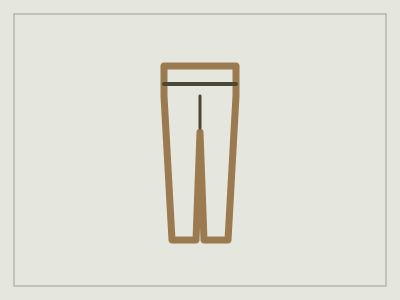
A wide-leg trouser is a generous shape, a lot of cloth falling from the hip in a broad column. That volume is the whole appeal, but it is also a proportion problem waiting to happen, because volume below has to be answered by the outfit above or the whole thing reads shapeless. Get the answer right and wide legs are among the most elegant and comfortable things you can wear. Get it wrong and they swamp you. The good news is the balancing rules are few and clear.
Fitted on top, almost always
The first and most reliable rule is that wide legs want a fitted or tucked top. The volume is below, so the eye needs a narrow note above to read the shape as deliberate.
- A slim knit tucked in
- A fitted shirt, tucked or front-tucked
- A close top with a defined waist
The contrast is the point. Narrow above and wide below gives a clear shape, an hourglass or a column with a marked waist, that the eye reads as intentional. Wide above and wide below gives a shapeless mass with no waist, which is the single most common way wide legs go wrong.
Mark the waist
Because wide legs fall from the hip in a broad line, the waist is the one place the outfit gets its definition, so it must be visible. This is why a tuck matters so much with wide legs: it marks where the trousers begin and gives the eye a clear waistline above all that volume.
With wide legs, the waist is the anchor of the whole outfit. Mark it clearly, with a tuck or a defined top, and the volume below reads as graceful drape. Leave it unmarked and the same trousers read as a shapeless fall from chest to floor.
Even a loose top can work over wide legs if the waist is marked another way, by an open jacket drawing vertical lines, or by the top's own shape ending at a defined point. But marked it must be.
Mind the length and the break
Wide legs live or die on length, more than almost any other trouser. Their whole appeal is the clean sweep of cloth to the floor, and that sweep needs the right length to hold its shape.
Too short and a wide leg looks stranded, hovering above the shoe with its volume cut off awkwardly. Wide legs generally want a longer hem, falling close to the floor with a medium break, so the cloth has room to fall into its full shape and the vertical line runs long. A slightly higher hem can work if it is clearly deliberate and paired with the right shoe, but the safe and elegant choice is length that lets the sweep reach nearly to the ground. Get the length right and the trousers pour down cleanly; get it wrong and all that lovely volume looks awkward and interrupted.
Choose the shoe with care
The shoe under a wide leg is mostly hidden, which changes what works. Because the hem falls long and broad, a delicate or fussy shoe disappears and can look lost beneath all that cloth. Wide legs generally want a shoe with a little presence, something that can be glimpsed under the sweep and hold its own.
A shoe with some height also helps, because it lengthens the leg beneath the volume and keeps the long hem clear of the floor. But height is not essential; a flat shoe with enough presence works well too. The point is that a wide leg wants a shoe that reads clearly at a glance, since only a little of it shows, rather than a fine, thin one that vanishes and leaves the hem looking like it ends in nothing.
Keep the top half clean
With so much going on below, the top half should stay calm. The volume of the trousers is the statement, so the top does not need to compete, and usually should not. A plain, well-fitted top lets the trousers lead.
This extends to the length of the top. A top that ends at or just below the waist reads clean over wide legs, keeping the waistline visible and the proportions clear. A very long top that falls over the hip can muddle the waist and lengthen the upper body until the whole outfit reads long and shapeless. Keep the top defined and relatively short, let the waist show, and the trousers get to do what they do best, which is fall in a beautiful broad line from a clearly marked waist.
The whole shape at a glance
Step back from all the rules and the shape you are aiming for is simple to picture: a clear, marked waist, a narrow or fitted note above it, and a long, clean sweep of volume below. That silhouette, narrow to wide with a defined join, is what makes wide legs read as elegant rather than overwhelming. Every rule here serves that single picture.
When wide legs are not working, run through the picture. Is the waist marked, or lost. Is the top fitted, or adding its own volume. Is the hem long enough to sweep, or stranded short. Is the shoe present, or vanished. Almost every wide-leg problem is one of these, and each has an easy fix. Solve them and you have one of the most comfortable elegant shapes there is, a trouser you can move and breathe in that still reads considered, because you answered its volume instead of being swallowed by it.